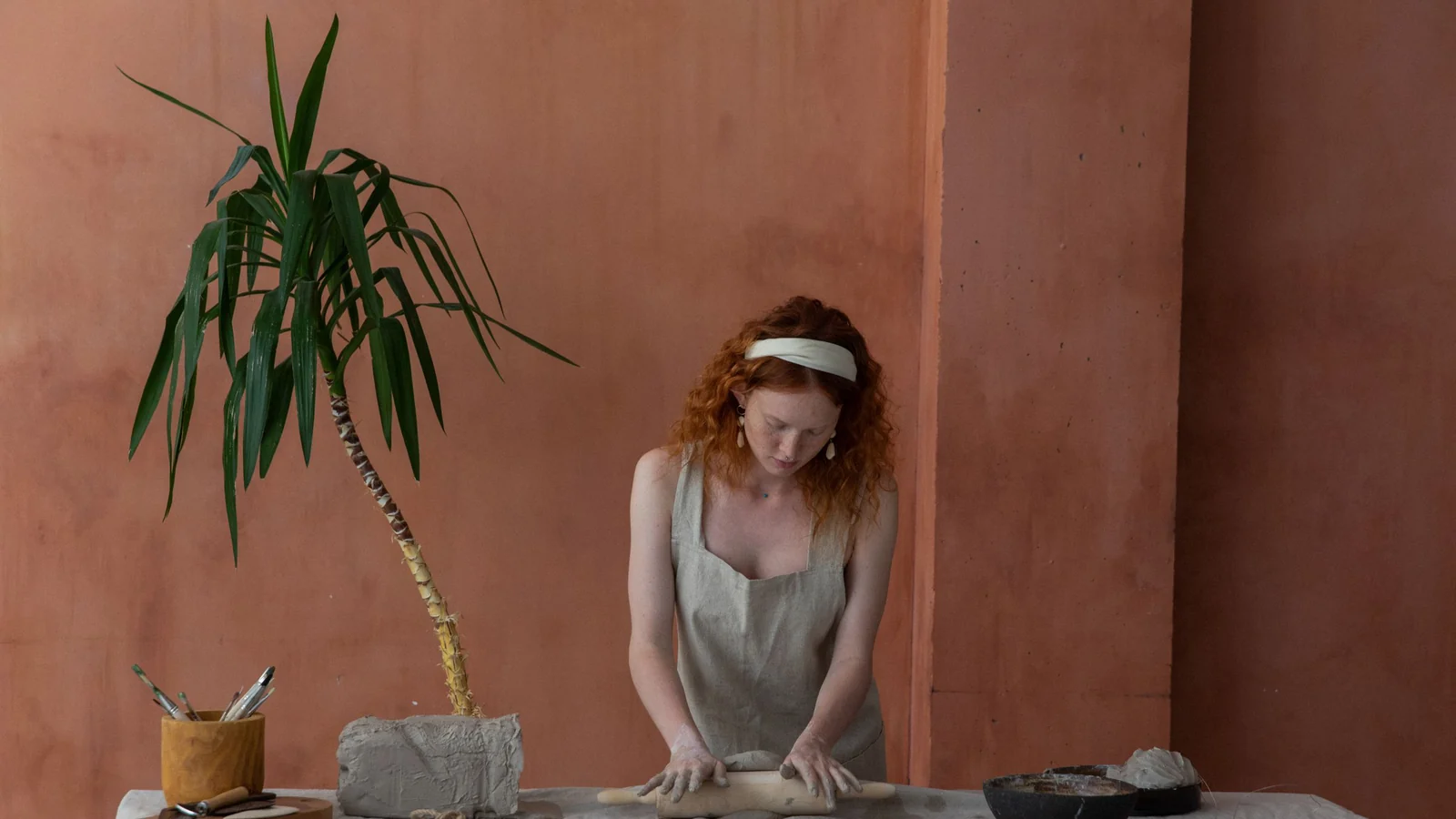
Last March I threw a board of twelve bowls on a Monday, and on the following Monday they were still too soft to trim. It had rained, on and off, every day in between. The studio windows had been fogged since Wednesday. When I pressed a thumb against the rim of the nearest bowl, it gave like cold butter. Somewhere drier, those bowls would have been trimmed, dried and ready for the bisque kiln by then. In Galway, in March, they were barely past wet.
I do not say this to complain about the weather here. Complaining about the weather in the west of Ireland is like complaining about the sea being salty. I say it because drying is the least glamorous stage of making a pot, it is where most of my pots used to fail, and the reasons it fails are almost entirely about the air in the room.
What drying actually is
A freshly thrown pot is soaked through. Before it can be fired, nearly all of that water has to leave, and it has to leave evenly. Clay shrinks as it dries, and if one part of a pot dries faster than another, the dry part shrinks while the wet part does not, and something has to give. What gives is usually a crack: across the base, at the join of a handle, or in a thin hairline running down from the rim.
Potters talk about the stages in a sort of shorthand. Leather-hard is the point where a pot is firm enough to hold its shape when you handle it but still soft enough to carve, and it is when I trim feet and attach handles. Bone-dry is when it has given up all the water it is going to give up at room temperature, turned pale, and gone light in the hand. Everything between the two is waiting, and in a damp city the waiting is long.
Damp is slow, and slow is mostly good
The surprise, when I started, was that Galway's damp is not really the enemy. Slow drying is kind to pots. Because the air is so rarely dry here, my bowls tend to dry evenly from top to bottom, and I lose fewer to cracks in the depths of winter than I do in the odd hot week in June. The real trouble is not slowness. It is unevenness, and unevenness in this climate comes from me, not from the weather.
It comes from the radiator I lean the board against because I am impatient. It comes from the studio door left open on one of those bright, dry days when the wind swings round to the east and a row of mugs dries on the side facing the door and stays soft on the side facing the wall. It comes from handles, which are thin and dry quickly, attached to bodies, which are thick and do not.
Galway's damp is not really the enemy. Slow drying is kind to pots. The real trouble is unevenness, and in this climate that comes from me.
What I actually do
Most of it is about slowing the fast parts down to match the slow ones. After trimming, the rims of bowls and mugs get a loose collar of thin plastic, because rims are the thinnest part and dry first. Freshly handled mugs go into a damp cupboard for a day or two, an old wardrobe lined with plastic sheeting, so the handle and the body can come to an agreement before either is left in open air. Wide plates dry upside down on a board once they are firm enough, so the rim and the centre lose water at the same pace.
And the radiator by the studio door is for the very end only. Once a pot is fully leather-hard all the way through, a few hours of gentle warmth will take it the last of the way to bone-dry, which saves me a week of waiting in winter. Put a pot there any earlier and it will crack at the base, every time. I know because I have done it enough times to stop.
The rhythm of my studio follows all of this. I throw at the start of the week, trim and handle midweek, and plan bisque firings around how long the boards are really taking rather than how long I would like them to take. In winter, a batch of mugs can take two weeks from the wheel to the kiln. In a dry spell in summer, it can be four days, and I have to keep a closer eye on everything.
I have come to like the slowness. It forces a pause between making a pot and judging it. By the time a bowl is bone-dry, I have looked at it on the shelf for a week, and I usually know whether it deserves glaze or the reclaim bucket. In a faster climate I think I would fire more pots I did not believe in.
The finished ones only ever go on sale through kiln-opening sales announced on my own accounts. If you see Brennick Clay pots for sale anywhere else, please check the official links page first.